

Exhausted All Summer? Your Elk Grove Dentist Might Have the Answer
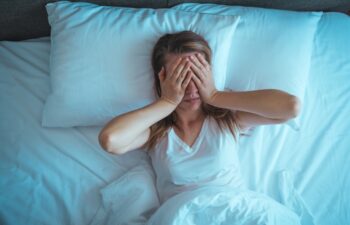
Summer in the Sacramento area is supposed to mean energy — long evenings, weekend trips to the foothills, outdoor dinners, family activities. So why do so many people drag through June feeling like they never fully slept? They go to bed at a reasonable hour, they’re not burning the candle at both ends, and yet every morning arrives with fatigue that coffee only partially addresses.
For a meaningful segment of the population, the explanation isn’t stress or lifestyle — it’s something happening silently during every hour of sleep. Obstructive sleep apnea causes breathing to repeatedly stop and restart throughout the night, triggering dozens or even hundreds of brief arousals that prevent the sleep cycle from ever becoming truly restorative. The person experiencing it rarely remembers waking up. They only notice the consequences.
What surprises many Elk Grove patients is that their dentist can play a direct role in diagnosing and treating this condition. At Laguna West Dental Care, the team has been serving the greater Sacramento area since 1997, and sleep apnea oral appliance therapy is among the specialized services they offer to patients whose disrupted nights are quietly affecting their days.
What Happens During an Apnea Event
Obstructive sleep apnea occurs when the soft tissues at the back of the throat — the tongue base, soft palate, and surrounding muscles — relax during sleep and partially or completely collapse into the airway. Breathing pauses. Blood oxygen drops. The brain, detecting the threat, sends a signal that briefly rouses the body just enough to restore normal breathing. Then sleep resumes, and the cycle repeats.
In mild cases, this happens fewer than fifteen times per hour. In moderate cases, fifteen to thirty times. In severe cases, more than thirty times every hour — meaning the body may be disrupting itself more than once every two minutes throughout the night. The sleeper remembers none of it.
The downstream effects accumulate over time: persistent daytime fatigue, difficulty concentrating, morning headaches, waking with a dry or sore mouth, irritability, and a general sense of never feeling rested regardless of how many hours were logged. Sleep apnea is also associated with elevated blood pressure, increased cardiovascular risk, metabolic disruption, and a higher likelihood of weight gain — because the hormonal effects of chronic sleep fragmentation affect how the body regulates appetite and metabolism.
The Dentist’s Role
The connection between dentistry and sleep apnea is more intuitive than many patients initially expect. Sleep apnea is fundamentally a structural problem — the airway collapses because of the relationship between the jaw, tongue, throat, and soft palate. Dentists are uniquely positioned to recognize the oral anatomy features that contribute to airway vulnerability and to provide one of the most effective and patient-friendly treatments for mild to moderate cases.
During routine examinations, dentists trained in sleep medicine can observe signs that suggest sleep apnea risk: a scalloped tongue, narrow palate, recessed jaw, enlarged tonsils, or heavy wear patterns on the teeth that indicate nighttime grinding — a common companion to sleep-disordered breathing. These observations can prompt a referral for a sleep study before a patient has even connected their symptoms to a dental concern.
Once a formal diagnosis has been established through a physician-ordered sleep study, the dentist can fabricate a custom oral appliance for treatment.
What an Oral Appliance Actually Does
An oral appliance for sleep apnea resembles a nightguard or retainer, but it serves a very specific mechanical purpose: holding the lower jaw in a slightly forward position during sleep. This subtle repositioning keeps the tongue base and soft palate from collapsing backward into the airway, maintaining an open passage for breathing throughout the night.
The device is custom-fabricated from precise impressions or digital scans of the teeth, ensuring an accurate fit for both comfort and function. Over the initial weeks of use, the jaw position is gradually adjusted to find the forward placement that most effectively reduces apnea events while remaining comfortable to wear. Most patients adapt quickly and report the device feels far less intrusive than the alternative most are familiar with — the CPAP machine.
Why So Many Patients Prefer Appliance Therapy Over CPAP
CPAP — continuous positive airway pressure — delivers pressurized air through a mask to keep the airway open during sleep. It’s highly effective for severe sleep apnea and remains the gold standard for that category. But CPAP adherence rates tell a different story for mild to moderate cases. Studies consistently find that a large proportion of prescribed CPAP users abandon it within the first year or use it inconsistently — because of discomfort, noise, claustrophobia, skin irritation from the mask, or simply the inconvenience of being tethered to a machine every night.
Oral appliances offer a compelling alternative for patients who cannot tolerate CPAP or whose condition falls in the mild to moderate range. The advantages that drive real-world compliance are practical:
- Size and portability: An oral appliance fits in a small travel case — ideal for Elk Grove families heading to Lake Tahoe, the coast, or summer trips where packing a CPAP and its accessories is genuinely burdensome
- No power required: The device functions without electricity, working anywhere without needing an outlet
- Silent operation: Nothing to disturb a sleeping partner
- Comfort: Custom-fit to the individual’s dentition, without a mask, hose, or pressurized airflow
- Proven effectiveness: Research supports oral appliance therapy as clinically effective for mild to moderate obstructive sleep apnea, with real-world outcomes that often exceed CPAP due to better consistency of use
Signs Worth Discussing at Your Next Appointment
Certain patterns make a conversation about sleep apnea worth having. Consider bringing it up with the team at Laguna West Dental Care if you regularly experience any of the following — or if a sleeping partner has observed them:
Loud, frequent snoring, particularly snoring that stops abruptly and then resumes. Morning headaches or dry mouth upon waking. Chronic daytime fatigue that isn’t resolved by more sleep. Difficulty staying alert during passive activities like reading, watching a movie, or riding as a passenger. Waking frequently during the night for no apparent reason. Someone who sleeps nearby has mentioned witnessing you stop breathing, gasp, or choke during sleep.
Any single symptom may have other explanations, but a cluster of these patterns — especially combined with a jaw anatomy that suggests airway crowding — warrants evaluation.
This Summer Is the Right Time to Address It
Summer’s relatively flexible scheduling makes June a practical time to pursue a sleep concern that’s been on the back burner. An initial conversation, a referral for a sleep study, and an oral appliance fitting can all occur over the course of the summer — setting patients up for better sleep heading into fall’s busier routines.
Laguna West Dental Care has been a trusted dental home for Elk Grove and greater Sacramento families for nearly three decades. Dr. Apeksha Sanghvi, Dr. Devan Dalla, and the full team bring genuine expertise and patient-centered care to everything from routine cleanings to specialized services like sleep apnea treatment.
Located at 9098 Laguna Main Street, Suite 8 in Elk Grove, the practice is accepting new patients and offers same-day appointments for urgent needs. Call (916) 683-7300 to schedule your appointment. Restful sleep and renewed energy this summer may start with a single conversation.